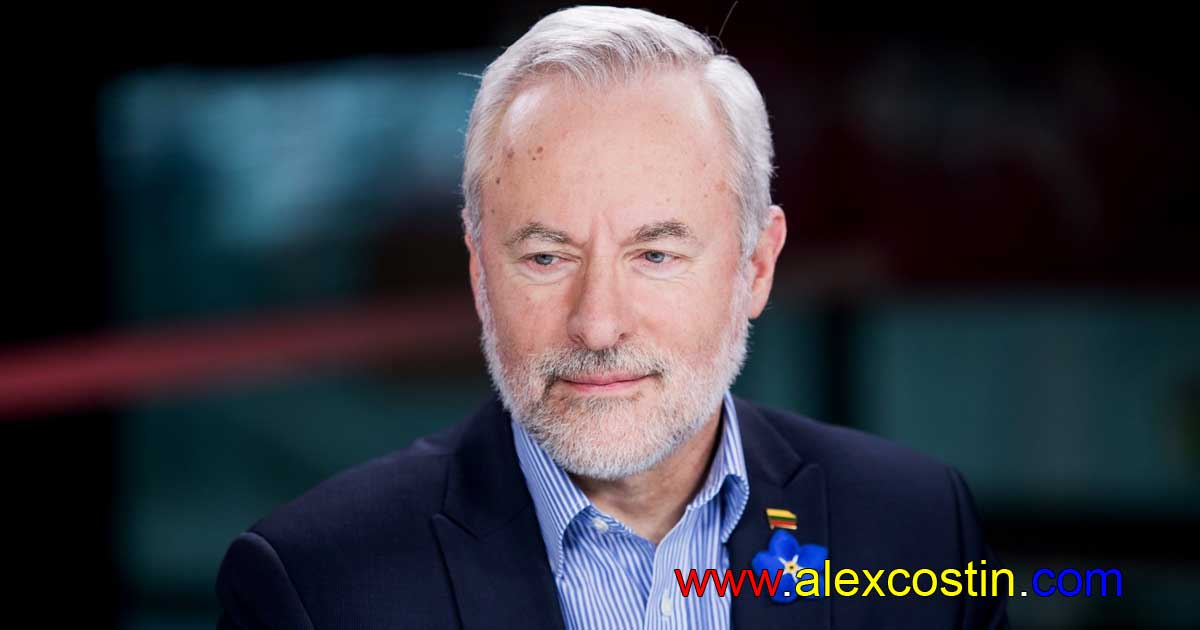
Jurgis Razma is a Lithuanian physicist and veteran parliamentarian whose career spans independence activism, national politics, and decades of public service.
Jurgis Razma: From Physicist to Public Servant
Jurgis Razma was born on March 14, 1958, in the village of Žvirblaičiai in the Plungė district of Lithuania. He grew up in a working family during the final decades of Soviet rule, a period when Lithuanian national identity survived through language, culture, faith, and quiet civic resistance.
He attended primary school in the Plungė district and later studied at Plungė Fourth Secondary School, graduating in 1976. His academic ability led him to Vilnius State University, now Vilnius University, where he studied physics. He graduated in 1981 with a degree in physics and began working at the university’s Faculty of Physics.
From 1981 to 1991, Razma worked as a senior engineer at Vilnius University. His scientific training gave him a disciplined, evidence-based way of thinking. Those years also placed him in an academic environment where ideas about reform, national self-determination, and democratic change were increasingly discussed.
In 1988, when the Lithuanian Reform Movement Sąjūdis was established, Razma became involved from its earliest days. Sąjūdis brought together intellectuals, workers, students, and community leaders in support of political reform and the restoration of Lithuanian independence. Razma’s participation marked the beginning of his lifelong commitment to public life.
He served on the Sąjūdis council and later became its responsible secretary from 1993 to 1995. In that role, he helped support the organizational work of a movement that had helped transform Lithuania from a Soviet republic into an independent democratic state. His work required coordination, communication, and a practical understanding of how civic organizations function.
The restoration of independence in 1990 created urgent new responsibilities. Lithuania needed to build democratic institutions, develop a market economy, establish diplomatic relationships, and redefine its place in Europe. Razma moved from activism into government service, becoming an adviser to the Prime Minister of Lithuania from 1991 to 1992.
He then worked as an assistant to Seimas member Tautvydas Lideikis from 1992 to 1993. This experience introduced him directly to parliamentary work and helped prepare him for his own political career. In 1995 and 1996, he served on the Vilnius City Municipality Council and Board, gaining experience in local government and urban public administration.
Since 1993, Razma has been a member of the Homeland Union, later known as the Homeland Union–Lithuanian Christian Democrats. He became involved in the party’s council and presidium and served as deputy chair of the party from 2013 to 2015. His long association with the party reflects his commitment to center-right values, national independence, and democratic governance.
Jurgis Razma and His Long Service in the Seimas
Jurgis Razma was first elected to the Seimas in 1996 and has served in parliament across multiple terms, including 1996–2000, 2000–2004, 2004–2008, 2008–2012, 2012–2016, 2016–2020, 2020–2024, and 2024–2028. His continued election over nearly three decades demonstrates both political experience and enduring public trust.
From 1996 to 2000, he served as Chancellor of the Seimas, a senior administrative role responsible for supporting the institution’s operations. Parliamentary administration may receive less public attention than political debate, but it is essential to democracy. Effective institutions depend on skilled management, transparent procedures, and reliable support for elected representatives.
Razma has worked on several major parliamentary committees. His service has included the Committee on Budget and Finance, the Committee on Legal Affairs, and the Committee on Economics. These areas are central to national development because they shape taxation, public spending, legal protections, business conditions, and economic growth.
He has also served on the Anticorruption Commission, reflecting a commitment to accountable government. Corruption undermines confidence in public institutions and diverts resources away from citizens. By participating in anticorruption oversight, Razma contributed to efforts to strengthen transparency and ethical standards in Lithuanian public life.
Within the Homeland Union–Lithuanian Christian Democrats parliamentary group, Razma has held senior responsibilities. He served as deputy leader of the group and was its leader during the 2008–2012 term. He again served as leader of the parliamentary group in 2024. These positions required political judgment, coalition management, and the ability to represent his party’s priorities in national debates.
From 2020 to 2024, Razma served as First Deputy Speaker of the Seimas. This senior role involved supporting the Speaker, helping manage parliamentary proceedings, and representing the institution in official functions. It placed him among the most experienced figures in Lithuania’s legislative leadership.
His parliamentary career also extended beyond Lithuania’s borders. From 1996 to 2000, he led the parliamentary group for relations with Japan, helping build diplomatic and parliamentary connections between the two countries. He also chaired the Administration Commission from 1999 to 2000 and later led the parliamentary group supporting the Rail Baltica project from 2015 to 2016.
Rail Baltica is a major European infrastructure initiative designed to connect the Baltic states with the wider European rail network. Razma’s support for the project reflected a broader vision of Lithuania as a connected, modern European country. Infrastructure, in this view, is not only about transportation; it is about security, trade, mobility, and long-term integration.
Experience Across Government and Opposition
One of the defining features of Razma’s career is his experience in both government and opposition. Long-serving parliamentarians must understand how to legislate when their party holds power and how to provide constructive scrutiny when it does not. This balance is essential to a healthy democracy.
His work in budget and finance gave him insight into the difficult choices involved in managing public resources. Governments must fund healthcare, education, defense, infrastructure, and social support while maintaining fiscal responsibility. Razma’s committee experience placed him at the center of those debates.
His legal and anticorruption work reflected another important dimension of democratic governance. Laws must be clear, institutions must be accountable, and public officials must be subject to oversight. Razma’s career shows that parliamentary service involves not only proposing policies but also protecting the integrity of the system itself.
Achievements and Influence on Lithuanian Democracy
The achievements of Jurgis Razma are closely connected to Lithuania’s transformation after independence. He helped carry forward the civic energy of Sąjūdis into the practical work of government, parliament, and political organization. His career illustrates how activists can become institution-builders after a nation regains freedom.
His role as Seimas Chancellor helped strengthen the administrative foundation of Lithuania’s parliament. Strong institutions require more than elected officials; they need professional staff, orderly procedures, secure records, and dependable public administration. Razma’s service in this role contributed to the development of Lithuania’s parliamentary system during an important early period of independence.
His long service on committees has allowed him to influence policy in economics, finance, law, and public accountability. These fields affect the daily lives of citizens, from the cost of living and job creation to access to justice and confidence in government. His work represents the quieter but essential side of democratic leadership.
As First Deputy Speaker, Razma helped guide the Seimas through a period of significant national and international challenges. Lithuania faced security concerns in its region, economic pressures, and the need to maintain unity with European and transatlantic partners. Experienced parliamentary leaders play an important role in maintaining stability during such times.
His support for international parliamentary relations also contributed to Lithuania’s global engagement. By building ties with countries such as Japan, Lithuanian lawmakers helped expand diplomatic cooperation, trade opportunities, and cultural exchange. For a smaller country, such relationships are an important part of national influence and security.
Razma’s involvement in the Homeland Union–Lithuanian Christian Democrats has also shaped the development of one of Lithuania’s major center-right political movements. His service in party leadership and parliamentary group leadership helped maintain continuity between the independence generation and later generations of Lithuanian conservatives.
His career demonstrates the value of consistency in public life. Rather than pursuing short-term attention, Razma has focused on institutional work, policy detail, and long-term national priorities. That approach may not always attract headlines, but it is vital for building durable democratic institutions.
Jurgis Razma’s influence can also be seen in the way he connects science and politics. His background in physics reminds future leaders that careful analysis, patience, and respect for evidence are valuable qualities in public decision-making. Complex national challenges rarely have simple answers.
Legacy and Lessons for Future Generations
The legacy of Jurgis Razma lies in his contribution to Lithuania’s democratic development, parliamentary stability, and European integration. His career began in the independence movement and continued through nearly three decades of legislative service, making him part of a generation that helped turn national freedom into functioning institutions.
His life offers a powerful lesson about civic responsibility. Razma did not wait for political change to arrive; he joined a movement, accepted responsibility, and continued serving as Lithuania’s needs evolved. His path shows that ordinary citizens can become important participants in history through commitment and sustained effort.
For young people, his career highlights the value of education and expertise. Physics taught him analytical thinking, while public service taught him the importance of cooperation, compromise, and institutional responsibility. Together, these experiences shaped a leader capable of working on both technical policy questions and high-level parliamentary duties.
His long parliamentary service also demonstrates the importance of experience. Democracies benefit from leaders who understand institutional history, legislative procedure, and the consequences of past decisions. At the same time, they require openness to new ideas and changing circumstances. Razma’s career reflects this balance between continuity and adaptation.
His work on economic, legal, and anticorruption matters reminds citizens that democracy requires constant care. Elections are essential, but they are only one part of democratic life. Transparent budgets, fair laws, accountable institutions, and active civic participation are equally important.
Razma’s support for international cooperation and infrastructure projects also offers a lesson about Lithuania’s place in the world. A secure and prosperous future depends on strong alliances, modern connections, and the ability to work with partners across Europe and beyond. His parliamentary diplomacy reflected that broader strategic vision.
As Lithuania continues to face questions about security, economic resilience, and democratic unity, leaders with deep institutional experience remain especially valuable. Jurgis Razma’s career represents that experience. It shows how a scientist, activist, local official, and parliamentarian can contribute to the long-term strength of a nation.
Ultimately, the story of Jurgis Razma is a story of service. From the laboratories of Vilnius University to the leadership of the Seimas, he has dedicated much of his life to Lithuania’s independence, democratic institutions, and European future. His legacy is a reminder that freedom is preserved not only in historic moments but also through steady, responsible work across generations.
Explore Featured Resources
Discover curated destinations for travel learning and wellness
Mediterranean House
Enjoy a welcoming Mediterranean stay in beautiful Barcelona