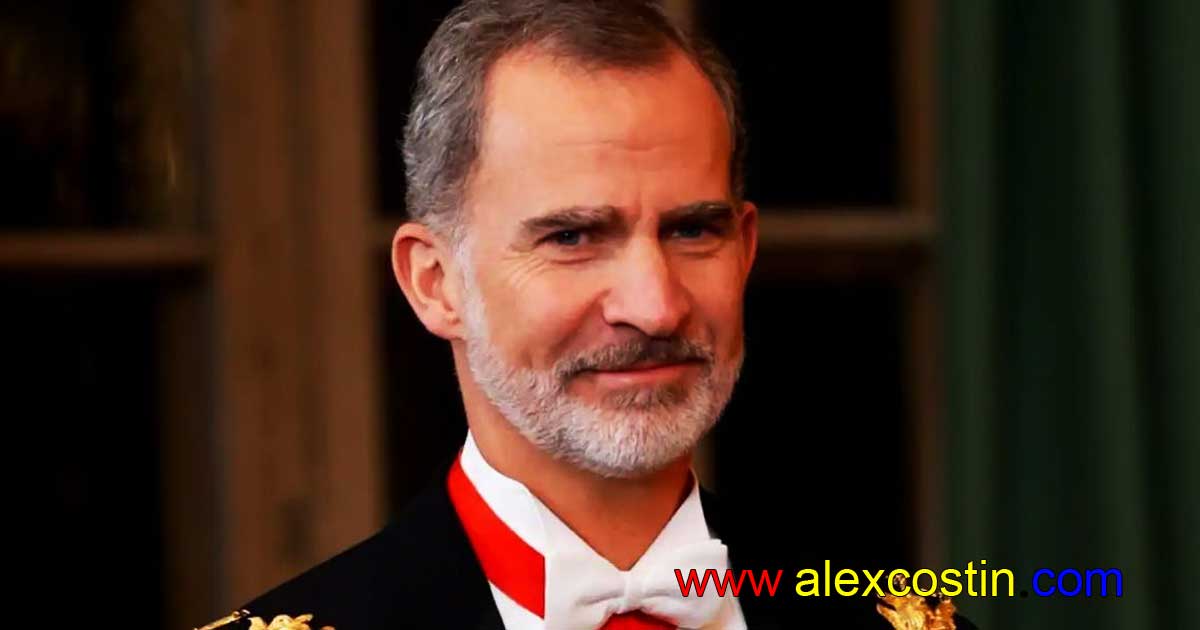
King Felipe VI is Spain’s modern constitutional monarch, guiding the monarchy through political change, national challenges, and a renewed commitment to transparency.
King Felipe VI
King Felipe VI is the reigning King of Spain and the head of state of one of Europe’s most prominent constitutional monarchies. Born Felipe Juan Pablo Alfonso de Todos los Santos de Borbón y Grecia on January 30, 1968, in Madrid, he became king on June 19, 2014, following the abdication of his father, Juan Carlos I.
Felipe VI came to the throne at a demanding moment in Spanish history. The monarchy faced public criticism, political change, and questions about its future, making his leadership and commitment to constitutional principles especially important.
As king, Felipe VI has worked to modernize the Spanish Crown while preserving its constitutional role. He represents national unity, performs ceremonial and diplomatic duties, and serves as commander in chief of the Spanish Armed Forces.
His reign has included major national challenges, including the Catalan independence crisis, the COVID-19 pandemic, political instability, and efforts to strengthen transparency within the royal household.
King Felipe VI’s story is one of preparation, responsibility, and adaptation. He entered public life as heir to the throne and gradually became a monarch focused on service, stability, and the values of Spain’s democratic Constitution.
King Felipe VI and His Path to the Throne
Felipe VI was born during the final years of the Francisco Franco dictatorship, at a time when Spain was beginning a slow process of political and economic liberalization. His father, Juan Carlos I, became king in 1975 and led Spain through its transition to democracy.
In 1977, Felipe was named Prince of Asturias, the traditional title given to the heir to the Spanish throne. From an early age, he understood that his life would be shaped by public duty and constitutional responsibility.
On his eighteenth birthday in 1986, Felipe swore allegiance to the Constitution before the Spanish Parliament. That moment formally confirmed his role as heir and demonstrated his commitment to Spain’s democratic institutions.
Felipe VI is the first Spanish monarch to have sworn allegiance to the 1978 Constitution. His legitimacy as king is therefore directly connected to Spain’s democratic framework, rather than to the political arrangements of the Franco era.
His preparation for monarchy was deliberate and wide-ranging. He received military, legal, and international education, giving him a strong foundation for the responsibilities he would later assume as head of state.
Education and Military Training
Felipe VI studied at Santa María de los Rosales School in Madrid before attending Lakefield College School in Ontario, Canada. His time in Canada broadened his international perspective and helped prepare him for a life of public representation.
Between 1985 and 1988, he completed military training at Spain’s army, navy, and air force academies. He trained at the General Military Academy in Zaragoza, the Naval Military School in Marín, and the General Air Academy in San Javier.
He was commissioned as an officer in all three branches of the Spanish Armed Forces and became a qualified helicopter pilot. This training prepared him for his constitutional role as commander in chief of the military.
Felipe VI later earned a law degree from the Autonomous University of Madrid in 1993. He also studied economics and completed a master’s degree in international relations at Georgetown University in Washington, D.C., in 1995.
His education reflects a modern approach to royal preparation. Rather than relying solely on tradition, Felipe VI developed expertise in law, diplomacy, defense, and international affairs.
He also represented Spain as an athlete, competing in sailing at the 1992 Barcelona Olympic Games. He finished sixth in the Soling class, demonstrating discipline and competitive spirit beyond his royal duties.
Prince of Asturias and Public Service
As Prince of Asturias, Felipe VI represented the Spanish monarchy at official events in Spain and abroad. He promoted Spanish businesses, culture, science, education, and international cooperation.
He became especially associated with the Prince of Asturias Awards, now known as the Princess of Asturias Awards. The honors recognize achievement in fields including arts, literature, science, sports, and international cooperation.
During the 1990s and early 2000s, Felipe VI developed a reputation as a serious and approachable public figure. His work helped prepare the monarchy for a new generation of leadership.
In 2004, he married Letizia Ortiz Rocasolano, a respected television journalist. Their marriage attracted widespread public attention because Letizia became the first commoner in Spanish history to become queen.
The couple has two daughters: Leonor, born in 2005, and Sofía, born in 2007. Leonor became Princess of Asturias and heir presumptive when Felipe VI became king.
King Felipe VI’s Reign and Major Challenges
Felipe VI was proclaimed King of Spain before the Cortes Generales on June 19, 2014. His accession followed the abdication of Juan Carlos I and marked the first royal transition since Spain’s return to democracy.
At his proclamation, Felipe VI promised a renewed monarchy and a renewed Spain. He recognized that the Crown needed to earn public trust through service, integrity, and respect for democratic institutions.
One of his first priorities was reforming the royal household. Felipe VI introduced measures intended to increase transparency, improve financial accountability, and modernize the monarchy’s public image.
His reign has also been shaped by political fragmentation in Spain. The rise of new political parties and repeated difficulties in forming governments created a more complex environment for the monarchy.
As a constitutional monarch, Felipe VI does not govern directly. Instead, he represents the state, sanctions and promulgates laws, carries out constitutional functions, and works within the limits established by Spain’s democratic system.
The Catalan Independence Crisis
The most serious political challenge of Felipe VI’s reign came in 2017, when Catalonia held an unauthorized independence referendum. The event triggered a major constitutional crisis in Spain.
On October 3, 2017, King Felipe VI delivered a televised address condemning the illegal referendum and defending Spain’s constitutional order. His speech emphasized the rule of law, democratic institutions, and national unity.
The address was controversial in Catalonia, where many independence supporters viewed it as overly aligned with the central government. Elsewhere in Spain, many citizens saw it as a necessary defense of constitutional legality.
The crisis tested Felipe VI’s role as a unifying head of state. He had to balance respect for democratic debate with the need to uphold the Constitution and the authority of Spain’s legal institutions.
His response demonstrated that he viewed the monarchy as a guardian of constitutional stability. It also showed the difficulty of representing unity in a country with deep regional and political divisions.
Leadership During the COVID-19 Pandemic
The COVID-19 pandemic presented another major test for Felipe VI and Spain. The country faced severe public health pressures, economic disruption, and widespread uncertainty.
During the crisis, the king and Queen Letizia participated in public messages of solidarity, encouraging citizens to support healthcare workers, vulnerable communities, and one another.
Felipe VI’s role was primarily symbolic and institutional, but symbols matter during national emergencies. His presence helped communicate continuity, unity, and shared responsibility.
The pandemic also reinforced the importance of public institutions that can provide reassurance during uncertainty. Felipe VI’s steady public role contributed to that sense of institutional stability.
His leadership during this period reflected a broader theme of his reign: adapting the monarchy to modern challenges while maintaining respect for democratic government.
Legacy and Lasting Influence
King Felipe VI’s legacy is still developing, but his reign has already established him as a modern constitutional monarch committed to transparency, institutional stability, and public service.
Modernizing the Spanish Monarchy
Felipe VI has worked to make the monarchy more accountable and responsive to contemporary expectations. His reforms have focused on financial transparency, ethical standards, and a more disciplined royal household.
He has emphasized that the Crown must serve Spain’s democratic institutions rather than stand above them. That approach reflects the constitutional principles established after Spain’s transition to democracy.
His marriage to Queen Letizia has also shaped the public image of the monarchy. Together, they have presented a more modern, professional, and accessible royal family.
Their daughters, Princess Leonor and Infanta Sofía, represent the next generation of the Spanish monarchy. Leonor’s preparation as heir reflects Felipe VI’s commitment to continuity and responsible public service.
By emphasizing education, duty, and constitutional values, Felipe VI has sought to ensure that the monarchy remains relevant in a changing democratic society.
An Inspirational Example of Public Duty
Felipe VI’s life offers an inspirational example of preparation and responsibility. From military academies to university studies and international education, he prepared carefully for a role that would demand judgment and resilience.
His reign shows that leadership is not only about authority but also about service. As a constitutional monarch, he has had to exercise influence without governing directly.
He has also demonstrated the importance of stability during uncertainty. Whether facing political crisis, a global pandemic, or questions about the monarchy’s future, Felipe VI has emphasized unity, legality, and public responsibility.
His story encourages young people to value education, discipline, and civic responsibility. It also shows that meaningful leadership often requires patience, restraint, and a willingness to adapt.
As King of Spain, Felipe VI continues to shape the modern monarchy. His reign represents an effort to preserve tradition while embracing the democratic values, transparency, and diversity of contemporary Spain.
Explore trusted services, expert resources, and helpful local guides