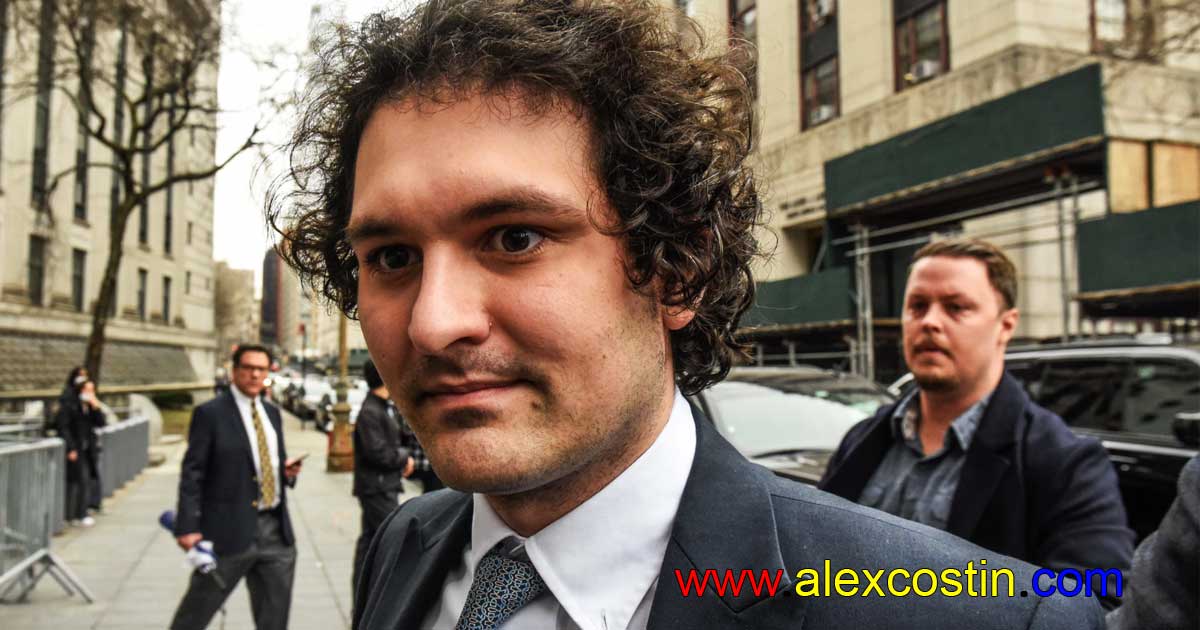
Sam Bankman-Fried rose from quantitative trader to crypto billionaire before his FTX empire collapsed into one of the most consequential financial fraud cases in modern history.
Sam Bankman-Fried
Sam Bankman-Fried was born on March 6, 1992, in Stanford, California, into a family deeply connected to academia and public policy. His parents, Joseph Bankman and Barbara Fried, were professors at Stanford Law School, and their household emphasized intellectual debate, ethical responsibility, and engagement with major social questions.
Sam Bankman-Fried attended Massachusetts Institute of Technology, where he studied physics and mathematics. He graduated in 2014 and soon joined Jane Street Capital, a quantitative trading firm. There, he developed skills in probability, risk management, and large-scale financial decision-making that would later shape his entry into cryptocurrency.
In 2017, he left Jane Street and co-founded Alameda Research, a cryptocurrency trading firm. Alameda specialized in arbitrage, taking advantage of price differences for digital assets across markets. At a time when crypto markets were fragmented and inefficient, the firm grew quickly and gave Bankman-Fried both capital and credibility.
Two years later, in 2019, he co-founded FTX with Gary Wang. FTX was designed as a cryptocurrency exchange for both retail traders and professional investors. It offered spot trading, derivatives, leveraged tokens, and other products that appealed to a rapidly expanding audience interested in digital assets.
FTX expanded at extraordinary speed. It secured major sponsorships, attracted prominent investors, and became one of the most recognizable brands in the crypto industry. By 2022, the company was valued at approximately $32 billion, and Sam Bankman-Fried had become one of the world’s most visible technology entrepreneurs.
His public image was unusual for a billionaire. He often appeared in shorts and T-shirts, spoke about effective altruism, and promised to give away much of his wealth. Supporters saw him as a pragmatic reformer who could bring maturity to a chaotic industry. Critics later argued that the image concealed serious governance failures.
Sam Bankman-Fried became especially prominent during the crypto downturn of 2022. As lenders and trading platforms faced liquidity problems, FTX and Alameda provided financial support to struggling firms. These actions strengthened his reputation as a stabilizing force, sometimes described as crypto’s “white knight.”
That reputation collapsed in November 2022. A CoinDesk report revealed that a large share of Alameda Research’s balance sheet consisted of FTT, a token issued by FTX. The disclosure raised urgent questions about whether the two companies were financially independent and whether customer assets had been used to support Alameda’s trading activities.
Confidence evaporated almost immediately. Customers attempted to withdraw roughly $6 billion from FTX within days, creating a liquidity crisis that the company could not withstand. A proposed rescue by Binance was considered but abandoned, and FTX filed for Chapter 11 bankruptcy on November 11, 2022.
Sam Bankman-Fried resigned as chief executive the same day. The collapse affected more than a million customers and investors, wiped out billions of dollars in value, and triggered investigations by regulators and prosecutors in the United States and the Bahamas. It also intensified calls for clearer rules governing digital-asset businesses.
In December 2022, he was arrested in the Bahamas and extradited to the United States. Federal prosecutors charged him with fraud, conspiracy, money laundering, and campaign-finance violations. He initially pleaded not guilty and was released on a $250 million bond while awaiting trial.
His bail was revoked in August 2023 after a judge concluded that he had attempted to influence potential witnesses. He was then held at the Metropolitan Detention Center in Brooklyn while preparing for trial. The case had become not only a financial scandal but also a defining test of accountability in the crypto sector.
Sam Bankman-Fried FTX Collapse and Fraud Conviction
Sam Bankman-Fried went on trial in New York in October 2023, facing allegations that he directed customer funds from FTX to Alameda Research without proper authorization. Prosecutors argued that those funds were used for risky investments, real estate, political donations, venture bets, and personal spending.
Former executives became central witnesses. Caroline Ellison, who led Alameda Research, Gary Wang, who co-founded FTX, and Nishad Singh, a former FTX executive, pleaded guilty to related charges and cooperated with the government. Their testimony described a culture in which customer deposits were treated as available capital for Alameda.
Prosecutors presented evidence that Alameda had borrowed billions of dollars in FTX customer funds. They argued that Sam Bankman-Fried knew the exchange did not have enough liquid assets to meet customer withdrawals and continued to present FTX as secure and well managed.
The defense argued that he acted in good faith and did not intentionally defraud customers. His lawyers claimed that he believed FTX and Alameda had sufficient assets to repay customers and that poor management, market conditions, and misunderstandings contributed to the collapse. The jury did not accept that explanation.
On November 2, 2023, a federal jury convicted Sam Bankman-Fried on seven counts of fraud and conspiracy. The charges included wire fraud, conspiracy to commit wire fraud, securities fraud conspiracy, commodities fraud conspiracy, and money laundering conspiracy.
In March 2024, Judge Lewis Kaplan sentenced him to 25 years in federal prison. The court also ordered forfeiture of approximately $11 billion, funds intended to support compensation for victims. Prosecutors had sought a substantially longer sentence, while the defense requested a much shorter term.
The sentence reflected the scale of the harm and the breach of trust involved. FTX was not merely a failed company; prosecutors and the court found that its founder had misused money entrusted by customers and investors while presenting the business as financially sound.
Sam Bankman-Fried appealed, arguing that the trial was unfair and that the court improperly limited evidence about whether FTX and Alameda could eventually have repaid customers. He also challenged the forfeiture order as excessive under the Eighth Amendment.
In June 2026, the United States Court of Appeals for the Second Circuit upheld his conviction, 25-year sentence, and roughly $11 billion forfeiture order. The appeals court rejected arguments that the trial had been unfair and found that the evidence supporting the verdict was sufficient.
In September 2026, he petitioned the United States Supreme Court to review the case and sought a new trial. The petition did not guarantee that the justices would hear the case, but it kept his legal fight alive while the underlying conviction and sentence remained in effect.
He also sought a presidential pardon after completing his sentence, according to reports in 2026. Throughout the process, Sam Bankman-Fried maintained that he was innocent, even as courts upheld the findings that he had orchestrated a massive fraud.
The FTX bankruptcy process continued long after the criminal case began. New management, led by John J. Ray III, worked to recover assets, investigate the company’s records, and distribute funds to creditors. The case became a landmark example of how quickly trust can disappear when financial controls fail.
FTX also pursued civil claims against former executives and other parties to recover money allegedly transferred before the bankruptcy. Those proceedings illustrated the broader consequences of the collapse, extending beyond criminal punishment into asset recovery and creditor compensation.
For customers, the collapse was not an abstract market event. Many had deposited savings, business funds, or investment capital on FTX. The case became a warning about the risks of leaving assets on centralized platforms without understanding custody arrangements, corporate governance, or financial safeguards.
Impact on Cryptocurrency and Financial Regulation
The fall of FTX changed how policymakers, investors, and ordinary users viewed cryptocurrency businesses. Before the collapse, Sam Bankman-Fried was frequently invited to explain digital assets to lawmakers and journalists. Afterward, his case became evidence for arguments that the industry needed stronger oversight.
One central lesson concerned custody. Customers often assumed that money deposited on an exchange remained separate from the company’s own funds. FTX demonstrated why segregation of customer assets, independent audits, transparent balance sheets, and credible governance are essential for any platform that holds other people’s money.
The case also exposed the dangers of interconnected corporate structures. FTX and Alameda Research were separate companies in name, but prosecutors argued that their finances were deeply entangled. When one entity faced losses, customer funds from the other were allegedly used to cover them.
Regulators around the world responded with greater scrutiny of exchanges, lending platforms, and crypto investment products. The scandal strengthened arguments for clearer rules on disclosure, risk management, anti-money-laundering controls, and the treatment of customer assets.
Investors became more cautious as well. Venture capital firms, institutional traders, and retail users began asking harder questions about proof of reserves, audit quality, executive conduct, and the difference between marketing claims and financial reality.
The collapse also damaged confidence in celebrity-driven financial promotion. FTX had invested heavily in advertising, sports sponsorships, and public relations. Its downfall showed that brand visibility could not substitute for sound controls, independent oversight, and honest disclosure.
For the effective-altruism movement, the case was especially painful. Sam Bankman-Fried had presented himself as a leading advocate of using wealth to reduce suffering and improve the world. The fraud conviction forced many supporters to reconsider how philanthropic ideals can be distorted when they are detached from ethical constraints.
The broader lesson is that good intentions do not excuse misconduct. A commitment to helping others cannot justify deception, risk-taking with customer funds, or the concentration of power without accountability. The case became a study in how ambition can outrun judgment.
It also highlighted the importance of whistleblowers, journalists, and bankruptcy professionals. The CoinDesk reporting that helped trigger the crisis, the cooperation of former executives, and the work of FTX’s post-bankruptcy leadership all played roles in revealing what had happened.
Technology did not cause the fraud; people and institutions did. Blockchain systems can record transactions transparently, but they cannot by themselves ensure that a company is honest, solvent, or properly governed. Human choices remained decisive.
The FTX case therefore became a reference point in debates about the future of digital finance. It showed both the potential of innovation and the danger of treating new technology as exempt from basic financial responsibilities.
Legacy and Lessons From a Dramatic Downfall
The legacy of Sam Bankman-Fried is defined by contrast. He built one of the fastest-growing companies in cryptocurrency, became a symbol of the industry’s ambition, and then became equally symbolic of its failures. His story is now studied as a case of rapid success, weak governance, and catastrophic loss of trust.
His rise demonstrated how quickly new financial technologies can attract capital and attention. FTX grew because it offered products traders wanted, moved decisively in a fast-changing market, and benefited from a period of intense enthusiasm for digital assets.
His fall demonstrated that growth without controls is fragile. A company can raise money, win customers, and achieve a high valuation while still concealing serious weaknesses. When confidence disappears, those weaknesses can become impossible to manage.
The conviction and sentence established a clear legal message. Founders and executives cannot treat customer funds as personal capital, mislead investors about financial health, or evade responsibility by pointing to market volatility. Accountability applies even in emerging industries.
Sam Bankman-Fried’s continued appeals show that he has not accepted the outcome, but they also show the strength of the evidence and judicial findings against him. The Second Circuit’s decision in 2026 left his conviction and sentence intact, while his Supreme Court petition remained pending.
For the crypto industry, his story became a catalyst for reform. Exchanges faced greater pressure to prove that customer assets were protected, disclose their financial condition, and separate trading, lending, and custody functions.
For investors, the lesson is equally direct. Reputation, charisma, and promises of innovation are not substitutes for transparency. Before trusting any financial platform, users need to understand who controls their assets, how those assets are stored, and what happens if the company fails.
For entrepreneurs, the case offers a difficult but valuable lesson about culture. Leaders shape the standards of the organizations they build. When a founder encourages risk-taking without safeguards, treats compliance as an obstacle, or surrounds himself with people who fear disagreement, the consequences can be severe.
His biography also raises questions about the seductive power of success. At his peak, Sam Bankman-Fried had wealth, influence, media attention, and a reputation for brilliance. Those advantages may have made it easier to ignore warnings and harder for others to challenge his decisions.
Ultimately, the story is a warning about trust. Financial systems depend on people keeping promises, companies protecting customer assets, and leaders accepting responsibility for the power they hold. When those foundations fail, the damage reaches far beyond a single company.
Sam Bankman-Fried’s name will likely remain connected to FTX for generations. It will be remembered as a story of extraordinary ambition, a dramatic collapse, a landmark conviction, and a lasting reminder that innovation must be guided by integrity.
Explore trusted resources, expert services, and local guides
Discover four handpicked destinations for SEO, English learning, orthopedic care, and Marbella travel